- Python Weekly
- Posts
- Python Weekly (Issue 749 June 11 2026)
Python Weekly (Issue 749 June 11 2026)

Rahul Chaudhary
June 11, 2026
In partnership with

Welcome to issue 749 of Python Weekly. Let's get straight to the links this week.
One editor for writers, developers, and agents
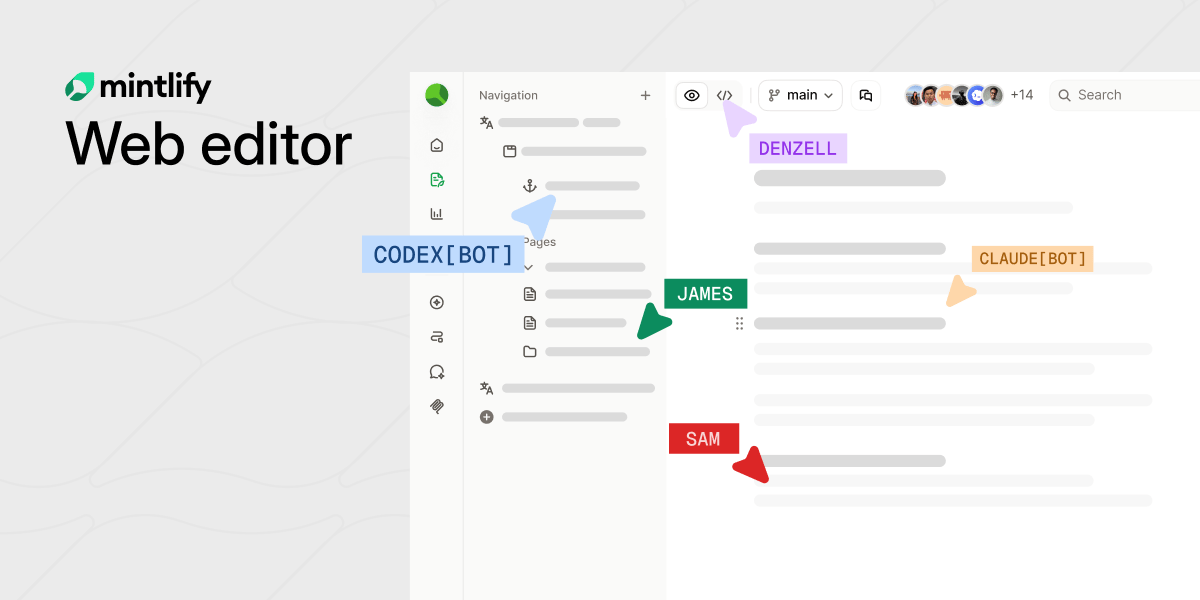
Your docs have more contributors than ever. Engineers, PMs, support, marketing, and now AI agents. But most documentation tools force a choice: an accessible editor for the whole team, or the rigor of git-based version control for developers. That tradeoff slows everyone down.
Mintlify's editor removes the tradeoff. Writers get a visual WYSIWYG experience with slash commands and editable navigation. Developers keep their git-native workflow. Every visual edit is a clean commit, every commit appears in the editor. Changes flow both ways.
The editor also brings live collaboration and AI agents as first-class contributors:
WYSIWYG editing with no markdown syntax required
Real-time multiplayer for war room-style doc sessions
MCP support so your AI can edit alongside your team
Two-way git sync that preserves a single source of truth
The best documentation is written by everyone who has context. That's your whole team. And now, your agents. Try it at mintlify.com.
News
The Steering Council says the CPython JIT has reached the point where it needs a formal Standards Track PEP covering guarantees, maintenance, and impact on redistributors before it can be treated as a supported feature. Until that PEP is accepted, they want no new JIT features or optimizations on main, and if no PEP is resolved within six months, the JIT code is to be removed from the main branch.
Articles, Tutorials and Talks
Simon Willison describes micropython-wasm, an experiment that runs MicroPython inside WebAssembly, allowing Python code to execute in a fresh sandbox with memory limits and host-controlled I/O. The approach is already powering a Datasette Agent plugin, though it remains alpha software and has not yet been vetted for safely running untrusted code.
A perceptron explained from scratch in Python, with interactive demos. Learn weights, bias, the decision boundary, epochs, learning rate, and why we normalize data.
A hands-on guide to instrumenting a Python LLM app with OpenTelemetry, tracing agent workflows, understanding the developing GenAI ecosystem, and visualizing telemetry in SigNoz.
So, you want to keep a sorted index in DynamoDB, but for whatever reason – usually throughput-related – it won't fit on a single partition. What do you do? Today, we look at the available solutions, do the math, and find out which is best.
Python library maintainers don't need to run every type checker on their source code. A better approach is to run one preferred type checker internally while validating public APIs and test suites across multiple tools such as mypy, Pyrefly, Pyright, ty, and Zuban. The article uses Polars as an example, showing that supporting multiple type checkers in implementation code can create significant maintenance overhead, while multi-checker API compatibility provides the greatest benefit to users.
This article demonstrates how to build a Model Context Protocol (MCP) server using Django and django-allauth, with OpenID Connect (OIDC) authentication handled by the allauth.idp package. It shows how MCP hosts such as Claude can dynamically register and authenticate clients without relying on separate third-party identity providers.
In this video, we'll look at how to setup django-q2 using a Redis task broker running in a Docker container. This gives a more efficient and production-ready setup than using the ORM.
The post highlights a set of Python libraries that work natively with Polars, letting you stay in the Polars ecosystem for validation, tables, visualization, and LLM-assisted analysis.
Interesting Projects, Tools, and Libraries
Self-hosted AI workspace.
Agent Skills for Google products and technologies.
Skills for threat modeling, scanning, triage, patching, plus an autonomous scanning harness you can customize.
A vector index built on TurboQuant, written in Rust with Python bindings.
The easiest way to access LLM APIs for free - no credit card, no registration. Copy a key from the table below, paste it into your app, and start building.
Find the local LLM that actually runs and performs best on your hardware. Ranked by real, recency-aware benchmarks, not parameter count. One command, run it instantly.
Local-first healthcare AI that never leaves the device.
Security scanner for AI agent skills. Detect vulnerabilities, malicious patterns, and security risks before installing agent skills.
Symbolica is a high-performance computer algebra library for Python and Rust. Manipulate large expressions, match patterns, and generate optimized numerical code — at unprecedented speed.
Open-source framework for the research and development of foundation models.
Upcoming Events and Webinars
There will be following talks
Seeking validation: An introduction to Pydantic
Simplified Python hosting and scale to zero on Phemeral
There will be following talks
Python For Cloud Data Engineering
Python Observability with Open Telemetry
Geospatial Computer Vision
There will be a talk, More than a match The magic that is structural pattern matching in Python.
There will be following talks
Local-First AI: Reducing Cloud Cost and Latency in Document Pipelines
Data Science Leadership in the GenAI Gold Rush
There will be following talks
Getting Started with PyO3
Rags to Riches – From the Hot Hampshire
There will be following talks
Clinical Trial Matching – LLMs Will Not Solve All Your Problems
Football Analytics 101: Introduction to Football Analytics with Python
Our Other Newsletters |
Programmer Weekly - A free weekly newsletter for programmers.
Founder Weekly - A free weekly newsletter for entrepreneurs featuring best curated content, must read articles, how to guides, tips and tricks, resources, events and more.